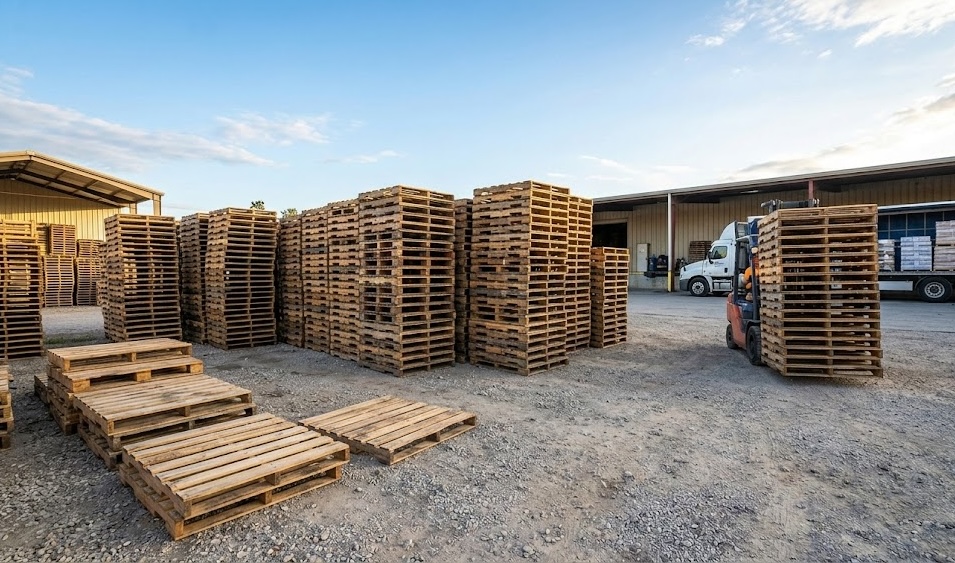
Food & Beverage Pallets
FDA-compliant, FSMA-ready pallets built for the strictest food safety and hygiene standards. From cold chain logistics to retail distribution, we keep your supply chain clean and compliant.
Request a Quote
FDA & FSMA Compliance Built In
The Food Safety Modernization Act (FSMA) transformed how food companies manage their supply chains, and pallets are a critical touchpoint. Every pallet that contacts or carries food products must meet strict standards for cleanliness, traceability, and structural integrity.
Stockton Pallet Co. supplies pallets that meet FDA food contact requirements and FSMA preventive controls standards. Our food-grade inventory undergoes rigorous inspection to ensure there is no contamination risk from chemicals, pests, mold, or foreign materials.
FSMA Preventive Controls
Pallets inspected for compliance with FSMA requirements for food facility sanitary transportation.
FDA Food Contact Standards
Grade A pallets suitable for direct and indirect food contact applications.
ISPM 15 Heat Treatment
All export pallets heat-treated to 56°C core temperature per international phytosanitary standards.
Full Traceability
Lot documentation and sourcing records available for audit and compliance purposes.
Why Grade A for Food & Beverage
For food and beverage applications, we strongly recommend Grade A pallets. Here is what sets them apart from lower grades in food safety contexts.
Grade A
RecommendedGrade B
Conditional UseGrade C
Not RecommendedHygiene Standards That Protect Your Product
A pallet that looks clean is not necessarily safe for food. Our hygiene protocols go far beyond visual inspection.
Visual Inspection Protocol
Every food-grade pallet undergoes a multi-point visual inspection checking for mold, staining, odor, pest evidence, chemical residue, and structural defects. Pallets that fail any checkpoint are diverted to non-food inventory.
No Harboring Point Design
We select pallets with tight board-to-stringer fits and no deep cracks or crevices where bacteria, mold spores, or pests could harbor. Smooth surfaces reduce the risk of microbial contamination.
Dry Storage Only
Our food-grade pallets are stored in covered, dry areas separate from non-food inventory. This prevents moisture exposure that leads to mold growth and maintains pallet integrity over time.
Pest-Free Guarantee
All pallets are inspected for insect activity, bore holes, and larvae. Heat-treated (HT) options eliminate pest risk entirely and meet ISPM 15 requirements for international food shipments.
Chemical-Free Processing
We do not use chemical treatments, pesticides, or fumigants on food-grade pallets. Heat treatment is the only pest mitigation method used, ensuring zero chemical residue on your pallets.
Separated Inventory Zones
Food-grade and non-food pallets are stored in physically separate zones in our yard. This prevents cross-contamination from industrial-use pallets that may carry chemicals, oils, or debris.
Wood vs. Plastic for Food Applications
Both materials have their place in the food supply chain. Here is an honest comparison to help you choose the right solution.
Wood Pallets
Plastic Pallets
Pallets Built for the Cold Chain
Cold chain logistics demand pallets that can withstand freezer temperatures, resist moisture, and maintain structural integrity through repeated temperature cycling. A pallet that warps, splinters, or develops mold in cold storage is a food safety and operational risk.
We supply pallets specifically selected and graded for cold storage and refrigerated transport, ensuring they perform reliably from warehouse to delivery.
Cold Chain Pallet Specs
How It Works in the Real World
Central Valley Food Distributor
Regional food distribution operation
The Challenge
A regional food distributor in the Central Valley was facing recurring audit findings related to pallet condition. Their existing supplier provided mixed-grade inventory with inconsistent quality, leading to contamination concerns and failed FSMA inspections. They needed a reliable source of Grade A, food-safe pallets with documentation for compliance audits.
Our Solution
We established a dedicated Grade A supply program with weekly scheduled deliveries. Every shipment includes lot documentation showing pallet grade, source, and inspection records. We also set up a pallet return program to reclaim and re-grade used pallets, reducing their total pallet spend by over 30% while maintaining full compliance.
Ready for Food-Grade Pallets You Can Trust?
Stop worrying about pallet compliance. Stockton Pallet Co. supplies FDA-ready, FSMA-compliant pallets with the documentation and consistency your food and beverage operation demands. Get a free quote today.